Introducing Accounts - Your Kitties, Safe and in Sync
Accounts are here. Log in on Kittysplit (web, iOS, or Android) and all your Kitties come with you. It’s our biggest update in a while, and it’s completely optional.
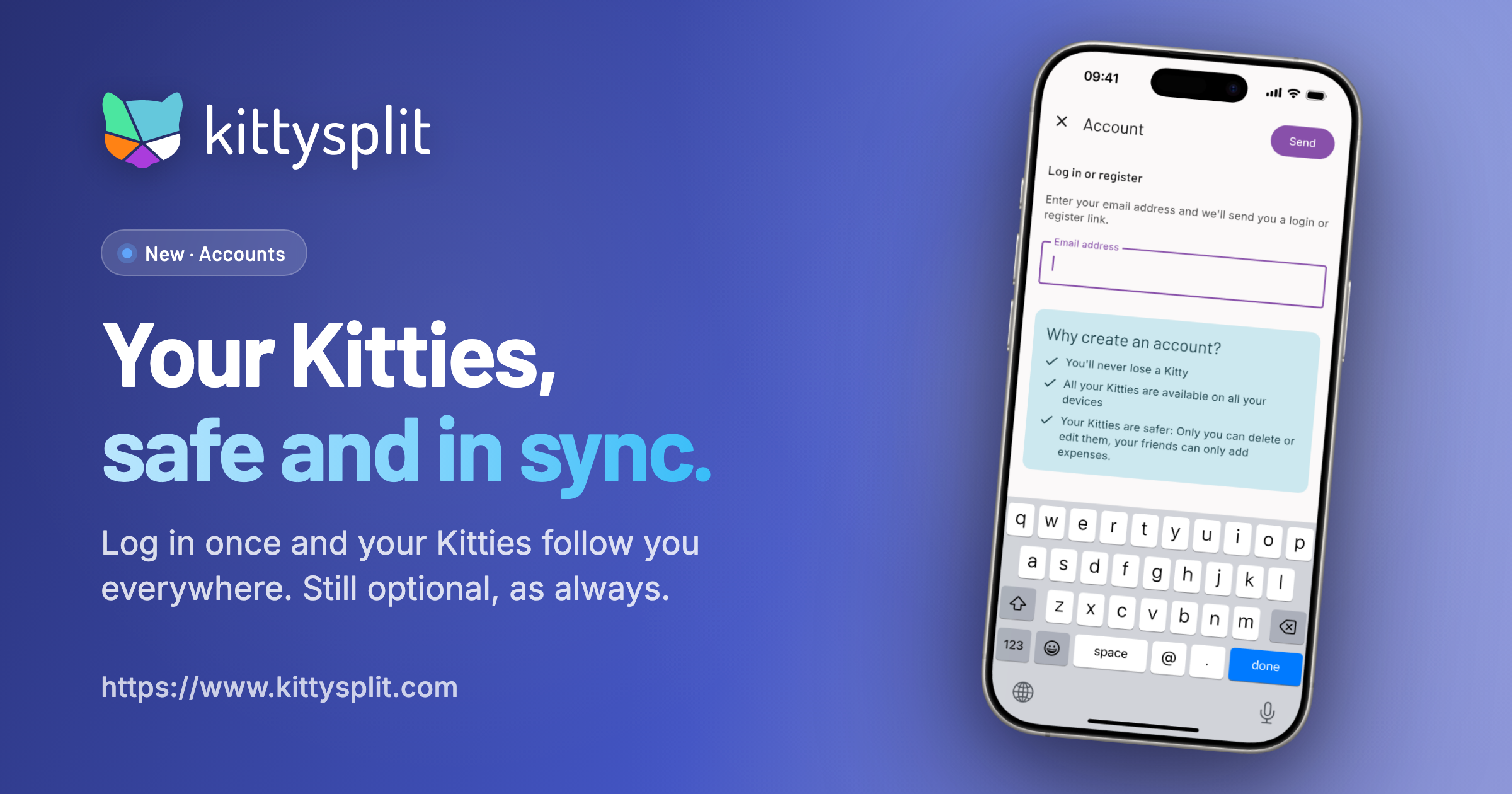
Accounts are here. Log in on Kittysplit (web, iOS, or Android) and all your Kitties come with you. It’s our biggest update in a while, and it’s completely optional.
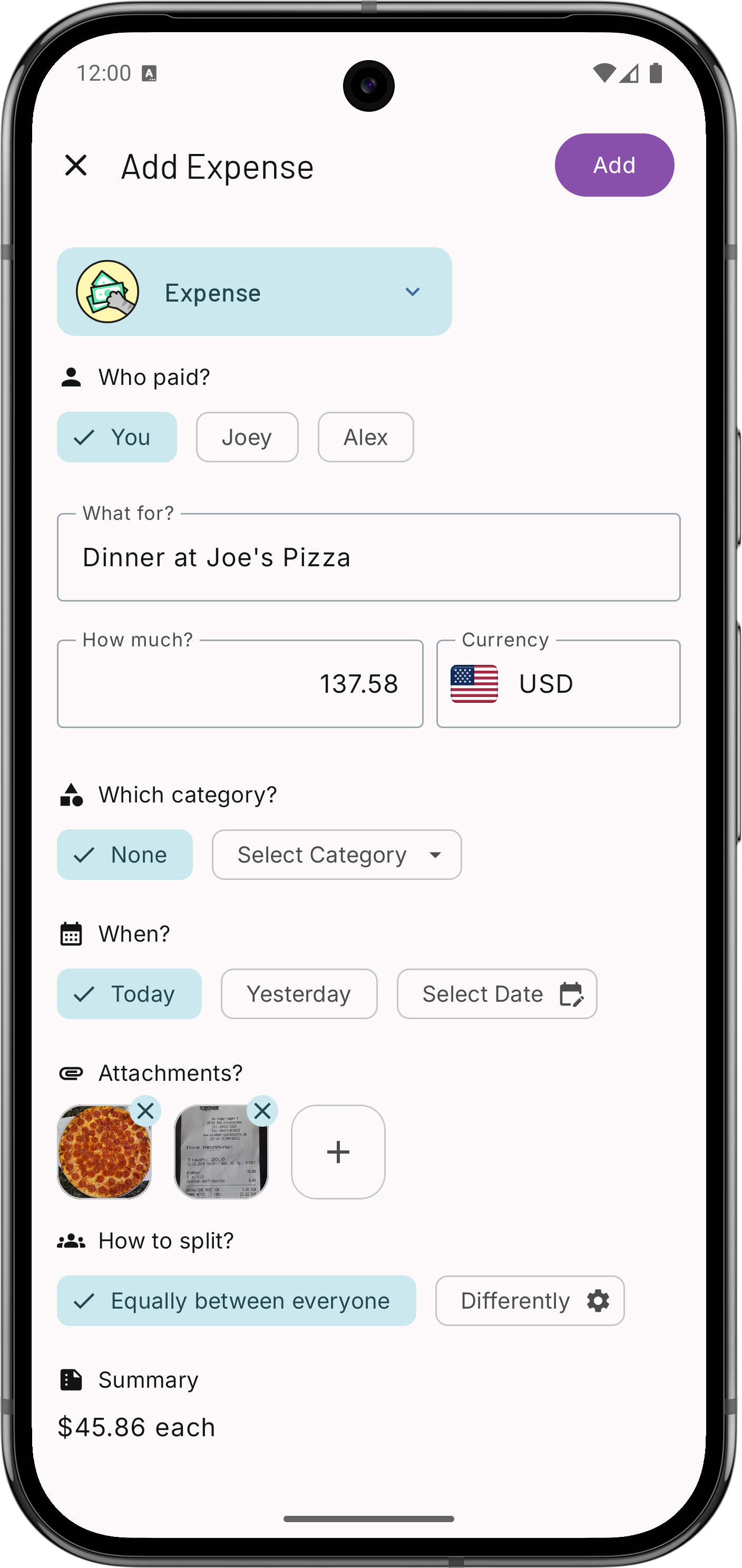
We’ve added expense attachments to Kittysplit! You can now attach up to 3 images to any expense in your Kitty. This is a Super Kitty feature, so you’ll need to upgrade your Kitty to use it.
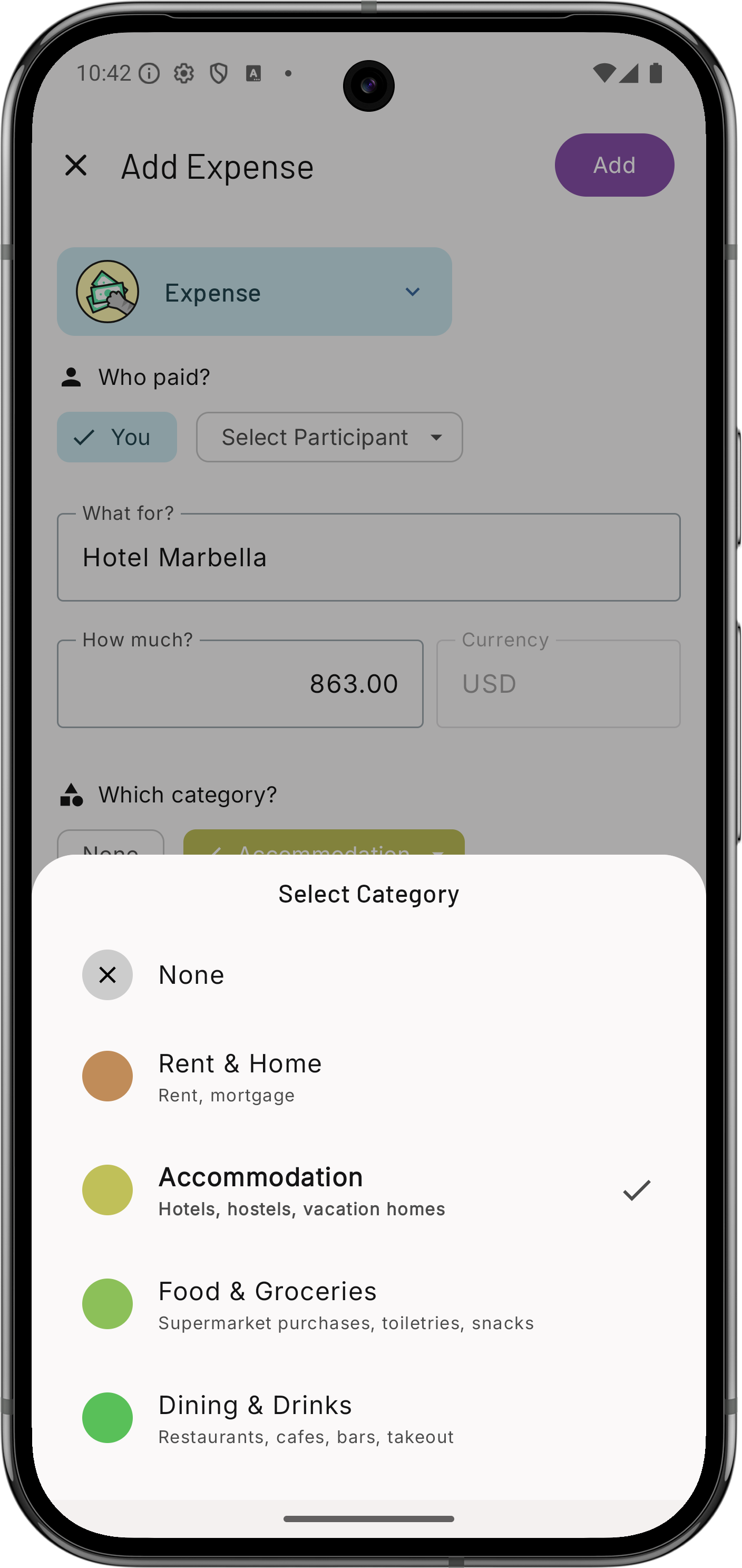
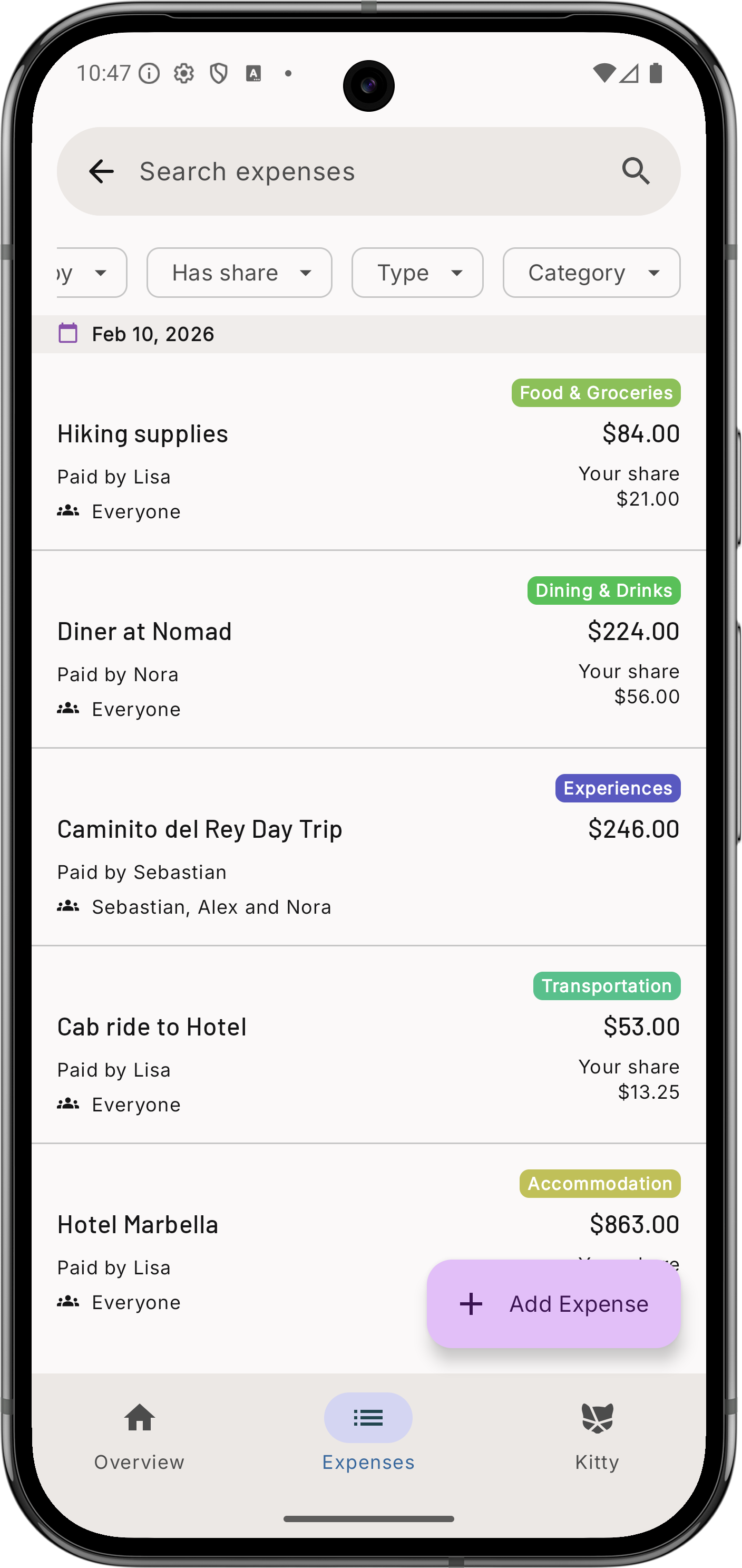
We’re happy to announce a powerful new feature for Kittysplit: Expense Categories! Starting today, you can organize every expense and income in your Kitties with categories, giving you a clearer picture of where your money is going.
 |
 |
|---|---|
| Add Expense | Filter by expense |
Just in time for Christmas 2025 the Kittysplit Apps are getting an update (v1.3), focusing on two improvements we’ve wanted to make for a while:
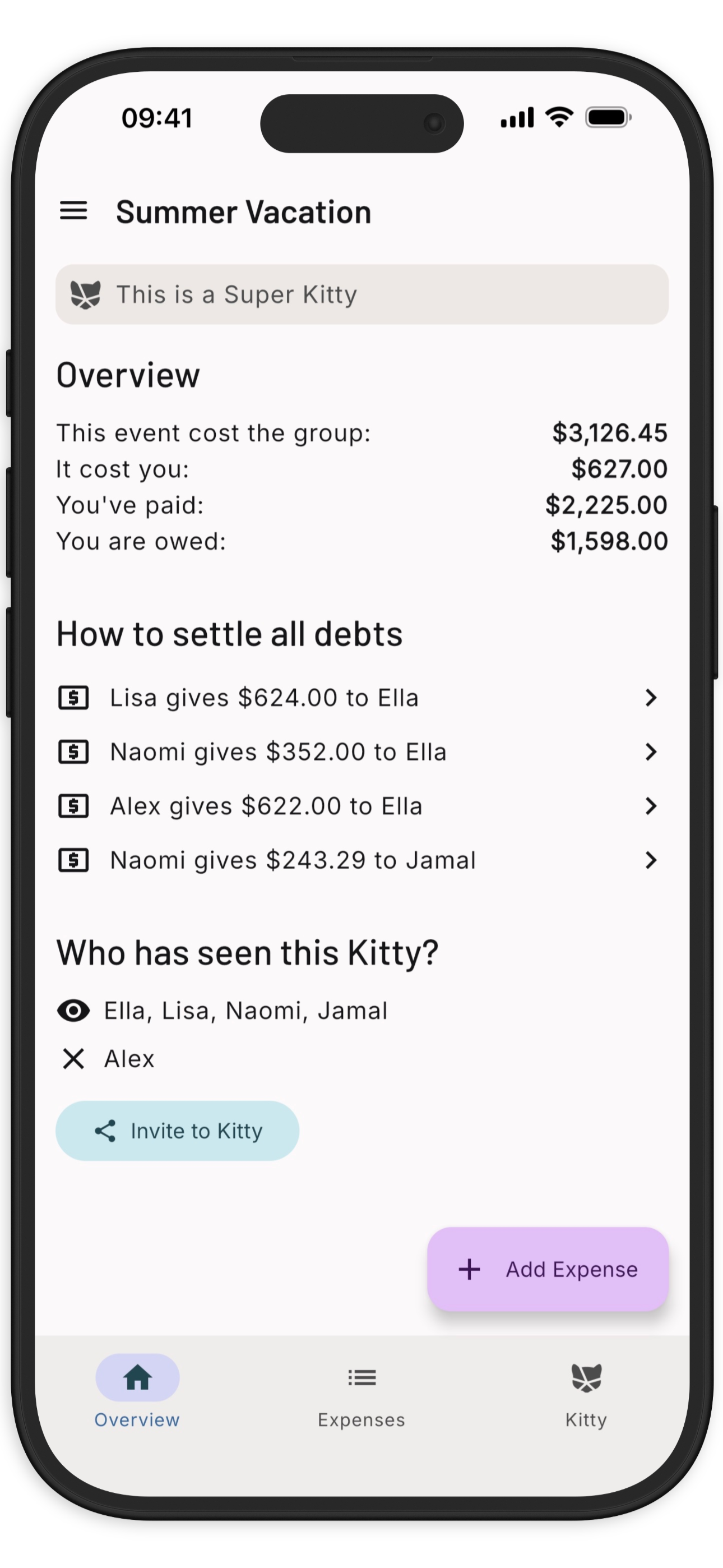
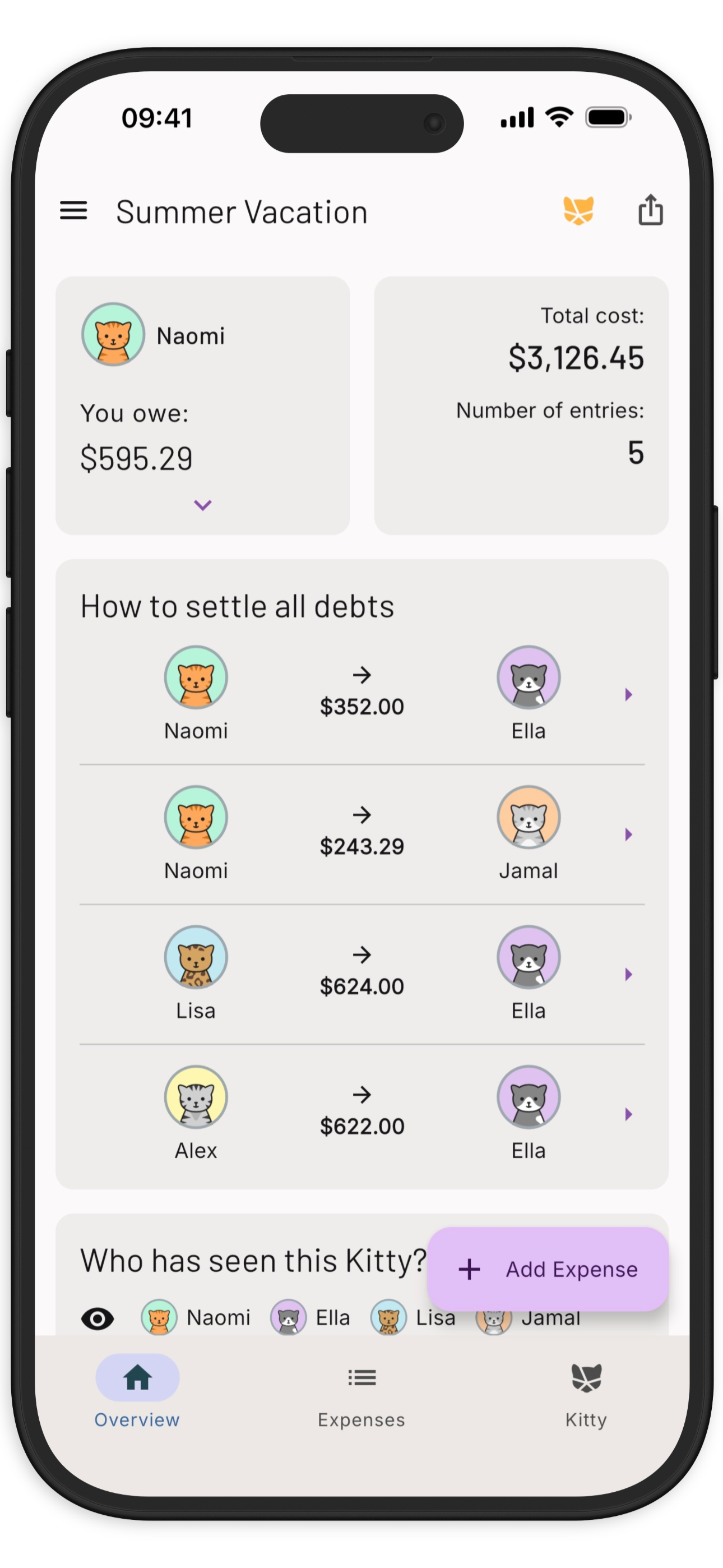
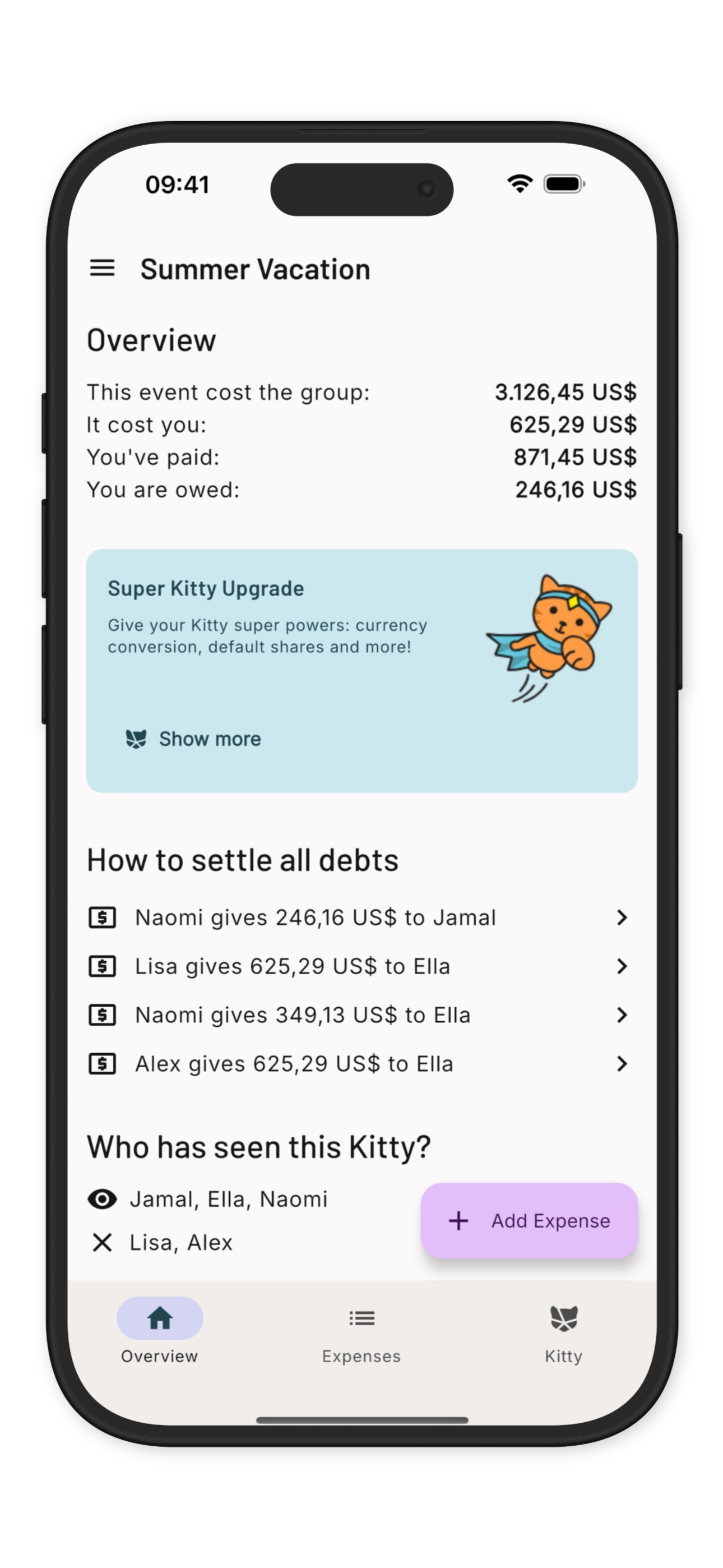
The overview is what you see first when opening a Kitty. We’ve reworked it to answer your main questions quickly: What’s the total cost of the event? Who owes what? Overall we tried give everything more structure with the help of Material Design Cards. This goes even beyond the overview in some parts.
 |
 |
|---|---|
| Kitty Overview - before | Kitty Overview - after |
We’re excited to share our story for the RevenueCat Shipaton 2025! As part of this fun hackathon, we finally took the leap and shipped our long-awaited Android and iOS apps for Kittysplit. The Shipaton challenged us to not just build something new, but to actually ship it and that’s exactly what we needed to push our mobile apps from “someday” to “today.” Below is the story we submitted for the hackathon, chronicling our journey from a simple side project born during a ski trip to launching our mobile apps.
Shipping a great app is only half the battle, earning high quality reviews is just as crucial for App Store Optimization (ASO). Ratings and reviews shape first impressions, drive conversion, and influence store ranking. For a product like Kittysplit, where trust and simplicity are everything, timely and authentic user feedback helps future users decide to install, and helps us steer the roadmap.
But asking for reviews is a delicate craft. Prompt too early and you interrupt the flow, prompt too often and you annoy users, prompt at the wrong moment and you get low‑quality or frustrated feedback. In this post, we’ll share how we integrated Google Play’s ReviewManager and Apple’s SKStoreReviewController into our Compose Multiplatform app, and how we built a cross‑platform strategy to decide when to ask. We’ll cover the technical glue, the platform nuances, and the heuristics we use to surface the prompt at moments when users are most likely to feel satisfied, not interrupted.
At Kittysplit, we’ve always aimed to make splitting group expenses as effortless as possible. For years, Kittysplit was a web first product. As our users took Kittysplit on trips, into shared apartments, and to events, it became clear that we needed mobile apps on both Android and iOS.
In this post, we’ll provide a hands-on guide how we wired Firebase Analytics into our Compose Multiplatform app on both Android and iOS without using Cocoapods (which is going to retire soon).
After 13 years as a web only application, Kittysplit has finally made the leap to mobile. We initially planned to build separate Android and iOS apps using Kotlin Multiplatform for shared business logic, but Compose Multiplatform’s recent stability changed everything. Here’s how we went from web only to native mobile apps.
After more than a decade as a web-only platform, Kittysplit is finally available as native mobile apps for both Android and iOS! Since our launch in 2012, we’ve been helping friends, roommates, and travel groups split expenses fairly and hassle-free through our web application.
We’ve always believed in creating the most accessible expense-splitting solution possible. For years, our web app has served users well, allowing anyone with a browser to easily manage their group expenses. However, we’ve listened to your feedback and recognized that many of you prefer the convenience of a dedicated mobile app experience.
We already had trouble with scam ads on Adsense several years ago. While such rather obvious scams like the fake virus warning from 2018 seem to have disappeared, other scam ads have shown up.
Last year, a user contacted us asking to cancel their subscription - but Kittysplit doesn’t offer any subscriptions. We soon figured that the user has been scammed by a fraudulent advertisement displayed while using Kittysplit on a phone.
Back in ancient history, around the same time Pharaoh Chephren built the Great Sphinx of Giza, we built various modes of splitting expenses into Kittysplit (ok actually it was in 2017). You’ve probably seen these under “Split differently” when adding an expense.
The power mode that allows you to do almost anything is to split an expense by “Weight”: You can, for example, enter the number of nights if some of your friends stayed longer in the rented home than others. Or you can use it to do a split by percent, simply by using weights that add up to 100 - the calculation is equivalent to % in that case.
La vie nous réserve parfois quelques tracas – et gérer les dépenses d’un groupe de personnes en fait définitivement partie.
Supposons que vous partiez en vacances entre amis et que chacun prenne en charge une ou plusieurs dépenses différentes, que certains prêtent de l’argent à d’autres ou même reçoivent de l’argent en raison d’un remboursement quelconque. Au final, c’est un vrai casse-tête de déterminer qui doit quoi à qui et d’inciter tout ce petit monde à régler ses comptes entre amis. Alors, comment répartir au mieux ces dépenses et coûts ?
Le problème est si courant qu’il existe déjà de nombreuses manières de le résoudre. Parmi elles, un tableur Excel ou des feuilles de calcul Google constituent bien entendu une solution tout à fait valable. Lis jusqu’à la fin pour découvrir nos 2 feuilles de calcul préférées à ce sujet.

Les vacances, il n’y a que ça de vrai ! En particulier quand on part à plusieurs. Mais il y a quand même toujours un petit inconvénient aux vacances entre amis : les questions d’argent. L’un paie le voyage en bateau, l’autre un repas. À cela s’ajoute l’AirBnB. Quelqu’un emprunte de l’argent à un autre et voilà – en moins de temps qu’il n’en faut pour le dire, vous vous retrouvez avec un problème arithmétique ultra-complexe pour tout répartir de nouveau. Si tu veux rester ami avec tous ceux avec qui tu es parti en vacances, nous te conseillons vivement d’utiliser une Bill-Splitting-App ou application de répartition des coûts.

Wer die Paarbeziehung nicht belasten möchte, sollte in allen Bereichen für klare Verhältnisse sorgen. Fairness gilt vor allem für das Thema Finanzen. Immer noch ist Geld eines der größten Streitthemen in Partnerschaften. Wer hier vorbeugt, kann sich viel Ärger ersparen und stellt das Miteinander auf ein solides Fundament. Das klingt doch erstmal gut, oder?

Urlaub ist herrlich! Besonders wenn man mit Freunden unterwegs ist. Jedoch gibt es gerade bei den gemeinsamen Urlauben immer einen Wermutstropfen: die Sache mit dem Geld. Der eine zahlt die Bootsfahrt, der andere ein Essen. Dann kommt das AirBnB hinzu. Es wird Geld geliehen und schwuppdiwupp hat man eine hochkomplexe Rechenaufgabe, um alles wieder auseinander zu dividieren. Wenn du mit allen Teilnehmern des Urlaubs befreundet bleiben willst, dann braucht ihr eine Bill-Splitting-App.
Native app or no native app? That’s a question that is regularly posed here at Kittysplit Towers. Kittysplit is a moderately successful webapp for splitting expenses in a group with 70.000 users per month. It is responsive and works pretty well on a mobile browser: 80% of our users are mobile. Yet we often get the request: “please build an app!” 🙏. What our users want, of course, is a “native” app that can be installed via the App Store. A webapp, on the other hand, is an app that works in your browser (i.e. Chrome or Safari).
Surely the answer is to build an app! Right? Every company worth its salt has an app.
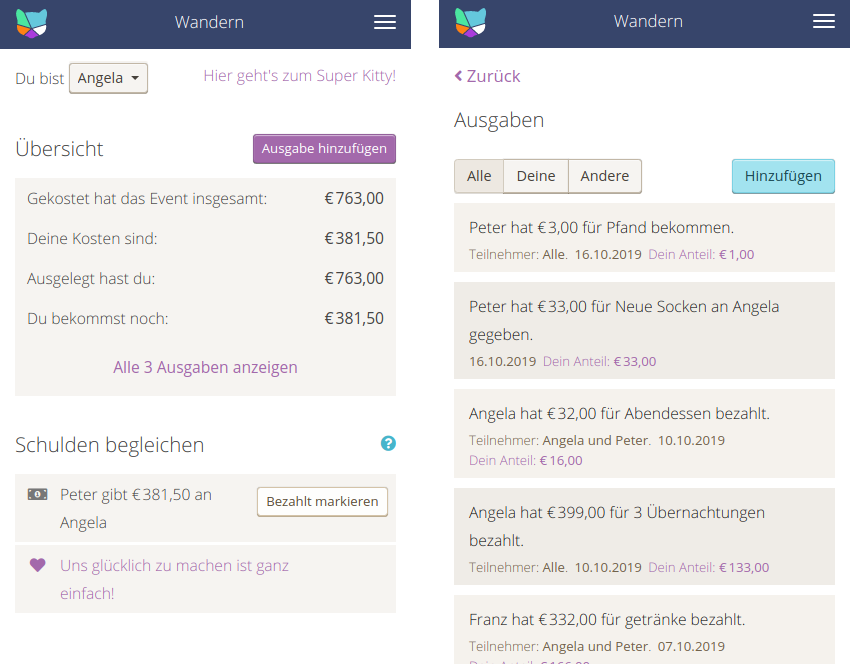
One of our friend Caspar’s side-projects is an online scoreboard that works without signup or install. You can share scoreboards simply by sharing a link. (Hmmm, that principle sounds familiar, no? 🤔).
It’s a webapp and is the simplest way to keep track of scores, guaranteed! You can create a new scorebaord in seconds and share it with other people, all without having to install anything anywhere.
Click here to take a look: Keepthescore.co: online scoreboard.
You know the feeling when someone’s telling a story that involves the cost of something in a foreign currency? “Can you believe that a sandwich costs 25 doubloons over there!” and they expect you to not only know the exchange rate but to do the conversion in your head. We find it annoying when that happens, and sadly it’s a problem that the newly released feature for Kittysplit doesn’t solve.
Instead, this new feature will make it much simpler to go on these types of international trips and track all costs in the native currency! That’s almost as good, we feel.

There are some hard things in life – and keeping track of expenses in a group definitely belongs on that list.
Say you’re going on a trip with friends and different people pay different expenses, lend money, maybe even receive money due to a refund. At the end of the day it’s a big hassle to work out who owes money to whom and to get everyone to settle up. How to split those expenses and costs?
The problem is so common that there are many different ways of solving it. Of course, an Excel spreadsheet or Google sheets are an absolutely valid solution. Read on for the 2 best spreadsheets we found for solving the problem.
Good news everyone! We recently added some new features to make sharing costs in a group even easier. This is all part of our ongoing push to become the best and easiest bill-splitting solution on the planet and beyond. And you know what? We are already half-way there.

OK, we don’t actually love GDPR, but now you’ve clicked on the link so let’s talk about it.

After 6 years of offering Kittysplit completely for free, today we’ve added some features that will cost money.
What does this mean for you? First of all: The Kittysplit core functions will remain free and all the stuff available for free yesterday is still free today. We’re not taking anything away and hiding it behind a pay wall. Instead, any Kitty can now be “upgraded” thereby adding extra features to it. We call upgraded Kitties Super Kitties, because they have super powers.

Today we spotted an ad on Kittysplit that opened a popup on mobile which couldn’t be closed.
The ad falsely claimed that a virus was installed on the device and completely broke the user experience.
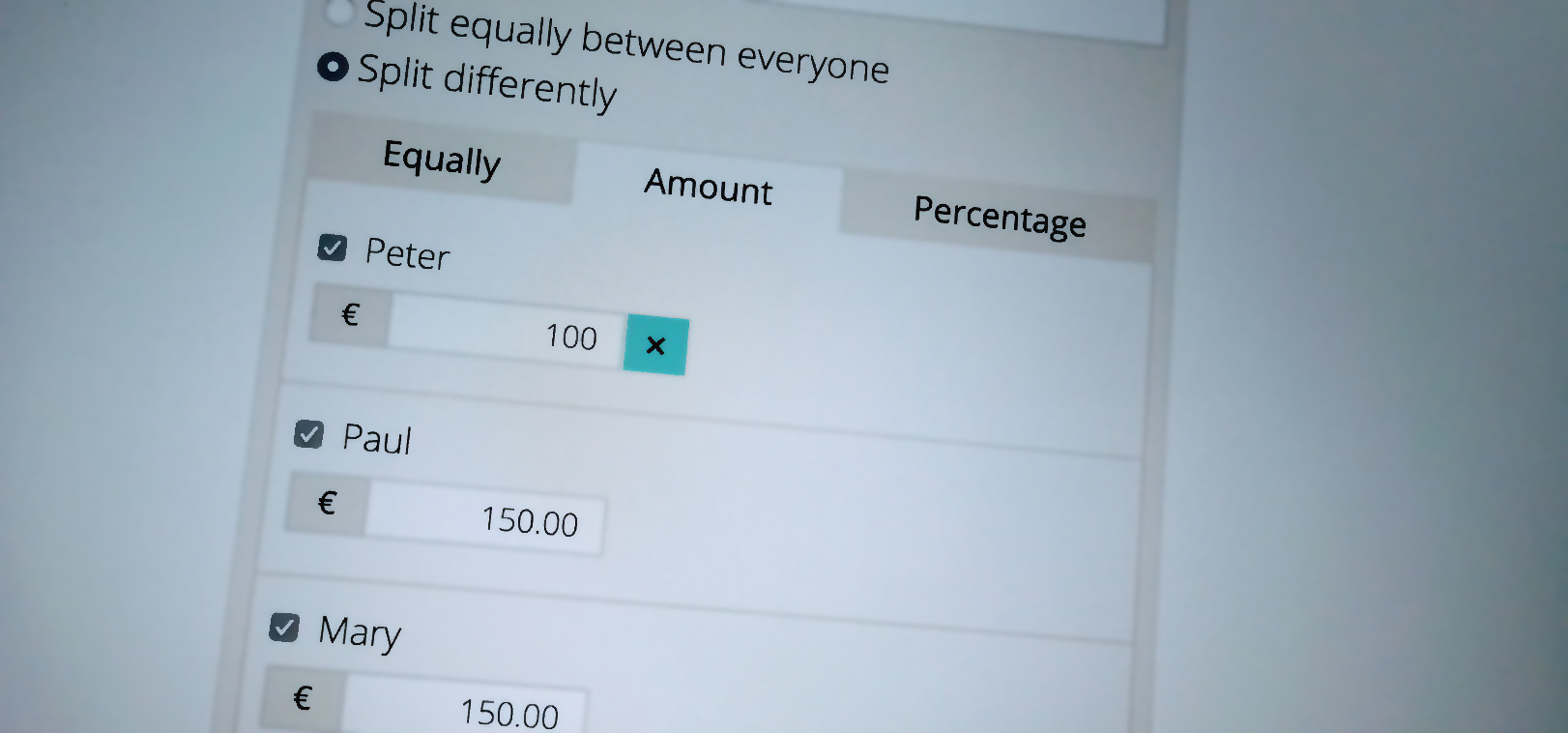
It’s been the most requested feature for the last 4 years. It’s our oldest ticket on GitHub. It’s being launched today: we call it unequal split.
Yeah, everyone hates ads, including us. Some people have argued that ads have in fact ruined the Internet. Now here we are explaining why we’re showing them on Kittysplit.
We did not have a good experience with Launchrock. It failed at almost the exact moment when a PR opportunity came through, meaning that potential users ended up seeing an error page instead a signup form.
Also, quite frankly, Launchrock as a product feels unfinished. Its UI is pretty creaky in places and the whole thing feels slow.
Split testing is of course a very broad topic with truckloads of tools, frameworks, opinions, caveats, and pitfalls. We’re not going to go into all of that, but describe a very easy methodology for testing a call-to-action using Google Analytics.
Last year we completely rewrote Kittysplit in Elixir and with the Phoenix Framework. Here’s a brief summary of what we learned and why we did it.
The first version of Kittysplit consisted of a Java backend running on Google App Engine (GAE) and a Javascript frontend (you can still reach it here). GAE, a Platform as a Service, comes with a lot of goodies already baked in, such as a noSQL datastore and automatic scaling of your application. They have a free tier which we quickly left behind, but it turned out that the hosting costs were peanuts (a few dollars a month).

This is just a quick note to say that we did it!
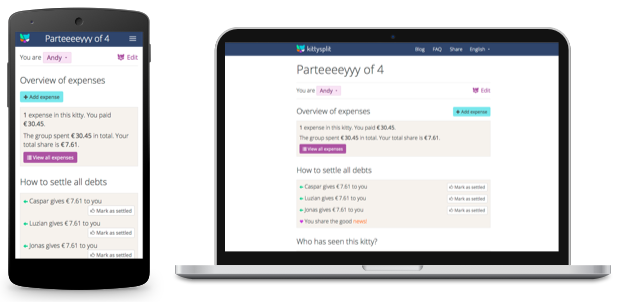
We launched the new version of Kittysplit. The old version, for nostalgia friends, is still online here. Your old kitties will continue to work exactly as before.
Erdem Cakmak, a first-time investor, is funding Kittysplit.
“I used Kittysplit for the first time during a holiday in Anatolia”, says Cakmak. “It immediately struck me as being very elegant and solved a real problem. So today, I am very pleased to announce that I have become a seed investor in Kittysplit”.
There is so much goodness in the new version of Kittysplit that we don’t actually know where to begin. It’s been completely rewritten from scratch and after vigorous testing we’re now confident that it can be slowly exposed to the light of the real world. You can try it here right now
You’re probably asking yourself what a “micro-startup” is. We call Kittysplit a micro-startup because we’re not funded, and we don’t make money (yet). We don’t have investors demanding regular updates, and we don’t have employees who depend on a monthly salary, hence we avoid a lot of the stress that “real” startups have. Nonetheless, the lessons we learned so far are definitely worth sharing.
One thing that will strike you if you read about startups is that the lessons they deliver often flatly contradict each other. This is because each startup and its environment is unique. It’s up to you, the founder of your own startup, to figure out which lessons apply to your unique situation.
Onto the lessons!
Hi everyone!
This is the first post in our brand new blog. What can you expect here? Well, we’ll sporadically post about things that may be of interest, such as: new features, stuff we learned, changes in our technology stack, excuses for why we did things the way we did them.
Also: let’s be totally honest here. A blog is a great place to build up a luscious meadow of keywords for the Googlebot to graze on.